

Signs You May Have Low NAD+ Levels and How to Restore Them
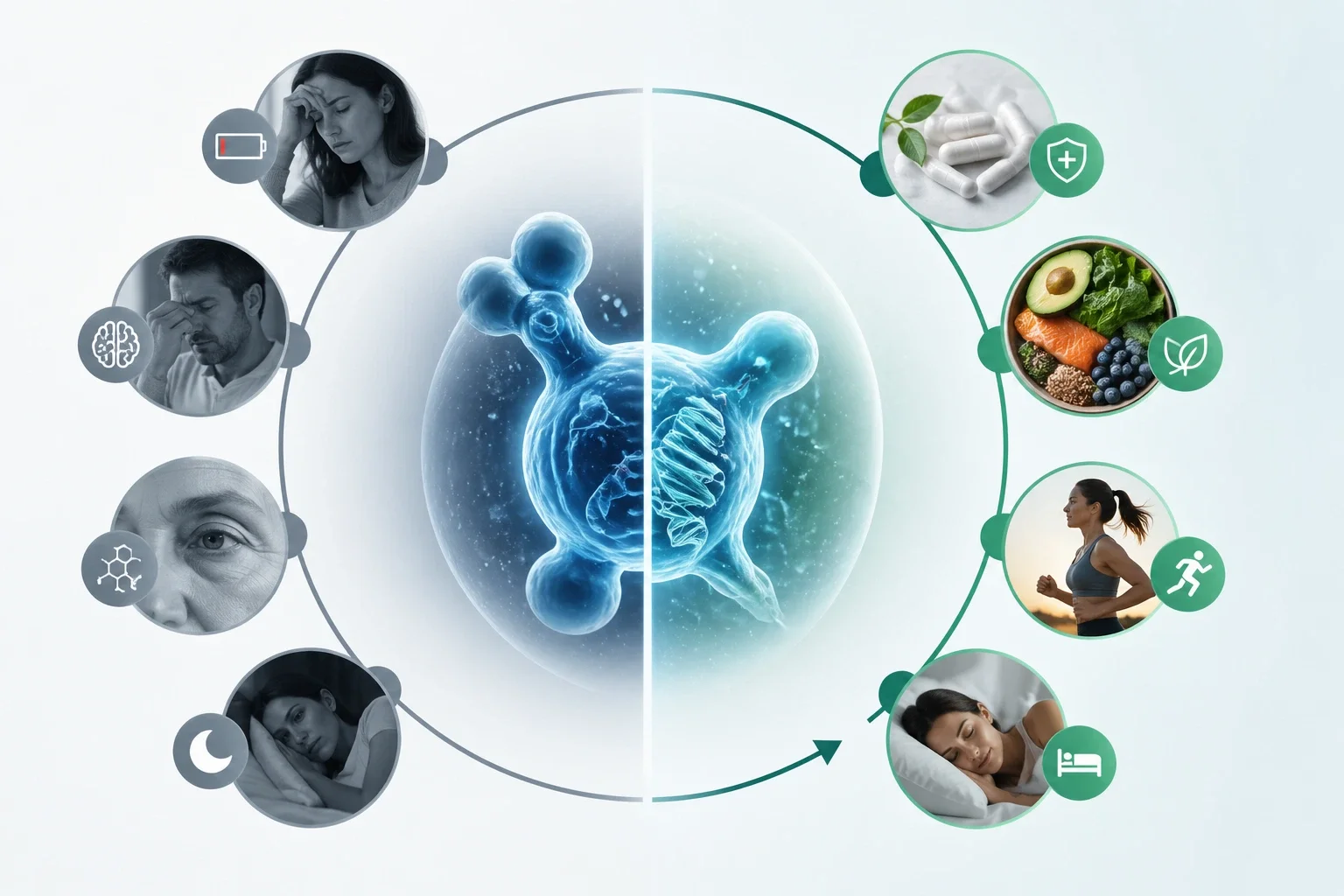
You may not have ever heard of NAD before, but you may be noticing how day-to-day activities don’t feel as easy as they used to. Your energy is lower. Sleep isn’t as restorative. Focus comes and goes. Recovery after workouts or even a weekend takes longer than it should. It’s frustrating, and it’s often written off as stress or just getting older.
But sometimes there's a more specific cause like low levels of NAD.
Nicotinamide adenine dinucleotide (or NAD) is a coenzyme in every cell of your body. (The mnemonic NAD and NAD+ are used interchangeably. The plus simply signifies that it is a positively charged molecule.) It's crucial to understand how cells generate energy, how they heal, and how they react to stress.
Here's what to expect, why it happens, and what you can do to make up for it.
What NAD Actually Does in Your Body
NAD powers your cellular energy. It powers metabolic processes to generate ATP, the currency of life.
It also activates sirtuins, which regulate how your cells respond to inflammation, repair DNA, and age, and support proteins that sense damaged DNA, called PAPRs. This isn't just about energy, it's about cell efficiency and resilience.
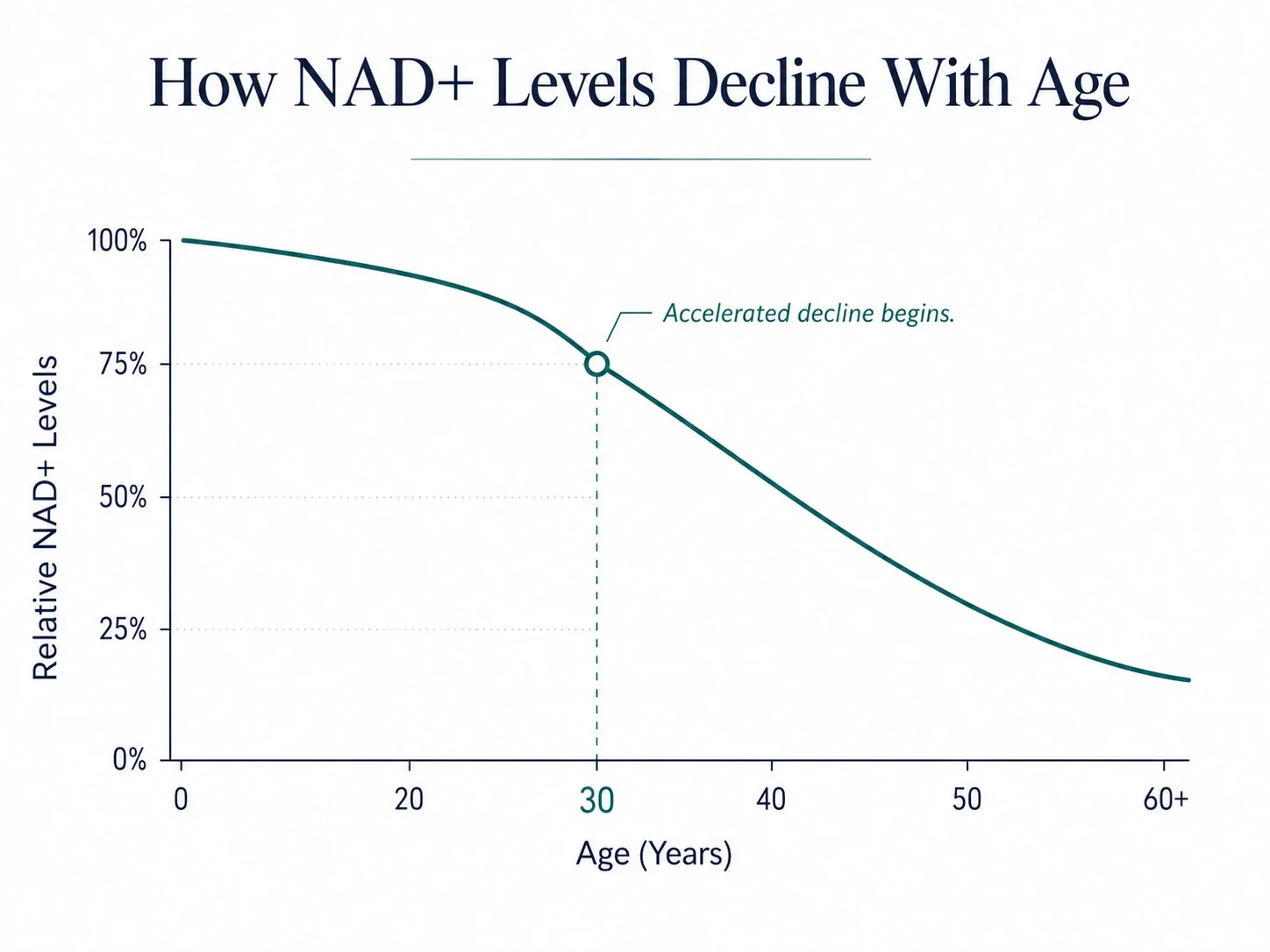
The number one cause of the decline is aging. Your NAD levels decline as you age (sometimes to half by middle age) and that decline can be accelerated by lifestyle choices. NAD is degraded continuously by oxidative stress on our bodies cells.
Signs That Your NAD Levels May Be Low
NAD deficiency may not be obvious. It's easy to underestimate symptoms, which is why many people suffer for years before realizing the signs.
Here are the most common signs worth paying attention to:
Persistent Fatigue That Sleep Doesn’t Fix
You’re sleeping enough, but still tired. Low NAD limits ATP production, so your cells can’t sustain energy. More coffee doesn’t fix a broken metabolism.
2. Brain Fog and Difficulty Concentrating
Your brain needs constant energy. When NAD drops, the supply gets inconsistent. The result is slower thinking, weak focus, and dull recall.
3. Slow Recovery After Exercise or Illness
NAD drives repair. Low levels slow muscle recovery and immune response. Workouts linger. Illness hits harder and lasts longer.
4. Mood Shifts and Increased Anxiety
NAD helps synthesize neurotransmitters such as serotonin and dopamine. When levels are low, so's your mood. Irritability, lack of motivation, or anxiety appear for no reason.
5. Disrupted Sleep Patterns
NAD regulates the day-night circadian cycle and melatonin production. Deficiency results in substandard sleep quality (even when hours aren't reduced).
6. Visible Signs of Aging That Feel Ahead of Schedule
NAD supports collagen and cellular repair. When it drops, skin loses resilience. Fine lines, dullness, and reduced elasticity appear sooner.
What Causes NAD Deficiency?
Age is the most common driver, but it’s rarely the only one. Several lifestyle and health factors are known to accelerate NAD decline:
Chronic alcohol consumption, which directly depletes NAD as the liver metabolizes ethanol
High-sugar and high-fat diets, which research shows can reduce skeletal muscle NAD levels within weeks
Chronic stress, which increases the body’s demand for NAD-dependent DNA repair enzymes
Poor sleep, which disrupts the circadian pathways that depend on NAD
A sedentary lifestyle, which reduces the metabolic activity that naturally supports NAD production
Certain medications and underlying health conditions that interfere with NAD metabolism
How to Increase NAD Levels Naturally and with Support
Getting NAD back to healthy levels requires consistent effort and sometimes additional support.
Lifestyle
Exercise, especially weight lifting and high-intensity exercise, as both stimulate NAD. Limited alcohol since it's a rapid depletion agent. Safeguard your sleep since NAD is closely associated with the body's internal clock.
Supplementing diet with NAD precursors such as tryptophan in chicken, turkey, and milk, and niacin in whole grains and leafy green vegetables.
Supplements
NAD precursors (NR and NMN) become NAD after you ingest them, which can increase your NAD levels. The limitation of this method is bioavailability, which limits the amount that enters the bloodstream, and it can have varying effects.
IV therapy
IV administration allows the NAD to bypass digestion and go directly into the bloodstream, delivering NAD more efficiently to your cells. It's commonly used to treat chronic fatigue, enhance recovery, or for supplementation.
Revive Wellness and Recovery provides NAD therapy administered by licensed registered nurses with medical director oversight, using hospital-grade equipment, at your home or office.
An infusion typically takes two to four hours, and people feel more alert and less fatigued within 24-48 hours.
The Bottom Line
Low NAD doesn’t hit all at once. It shows up gradually. Less energy, slower recovery, reduced focus.
If you’re in the Treasure Valley, serving Ada County and Canyon County, Revive Wellness and Recovery delivers NAD therapy to your door. No clinic required.
Frequently Asked Questions
-
Low NAD levels can show up as fatigue, poor focus, slower recovery, low motivation, disrupted sleep, and visible signs of aging like wrinkles. These symptoms are often subtle and overlap with other conditions, which makes them easy to miss.
-
Aging is the primary driver. Levels naturally decline over time. Poor diet, alcohol use, chronic stress, lack of sleep, inactivity, certain medications, and underlying health conditions can all accelerate that decline.
-
Exercise regularly, especially strength training and high-intensity workouts. Eat foods that support NAD production, including eggs, dairy, meat, whole grains, and leafy greens. Reduce alcohol intake, improve sleep quality, and manage stress consistently.
-
IV therapy delivers NAD directly into the bloodstream, bypassing digestion. Sessions typically take two to four hours, depending on dosage, and many people report feeling more alert and less fatigued within 24–48 hours. Oral supplements like NR and NMN support NAD levels over time but rely on absorption, so results are more gradual.
-
Adults experiencing fatigue, brain fog, or slow recovery may benefit. It’s common for people over 30, athletes, and those recovering from burnout. Supplements work well for ongoing support, while IV therapy is better for faster, more noticeable results.
Written by Christy Greene