

Why Celebrities and Athletes Are Turning to IV Therapy: Benefits, Trends & Reality

You've seen it. An IV bag taped to someone's arm before a flight, a fight, or a Friday night show. Once it lived only in hospitals. Now it's courtside and backstage, and people keep asking the same fair question: does this stuff actually work, or is it just hype?
Short answer: it's both. Athletes and performers use IV therapy because it rehydrates them fast and helps them bounce back when their calendar refuses to slow down. Some of that is legit, the physiology of it is real. Some is marketing. Below is the version without the gloss: the benefits, the trend, and the part nobody puts in the highlight reel.
For context, Revive Wellness and Recovery runs mobile IV care across Ada County and Canyon County. So yeah, this is our lane. We'll shoot straight.
Why Athletes and Performers Reach For It
Look at their week, and it clicks. Training burns through fluids and electrolytes. Flights dry them out as well as expose them to numerous toxins, chemicals and viruses. Game, match, show, repeat, with barely a gap to recover the normal way.
IV therapy for athletes skips a step. Rather than drinking and waiting on digestion, the bag sends hydration and nutrients straight into the bloodstream, ready to use almost right away. When you have to be sharp by tomorrow, that head start is the whole point. Sports recovery therapy that leans on fluids and a few targeted minerals and nutrients slots into a packed schedule without much fuss, which is how it jumped from elite locker rooms to pretty much everyone.
What's Inside a Nutrient Infusion
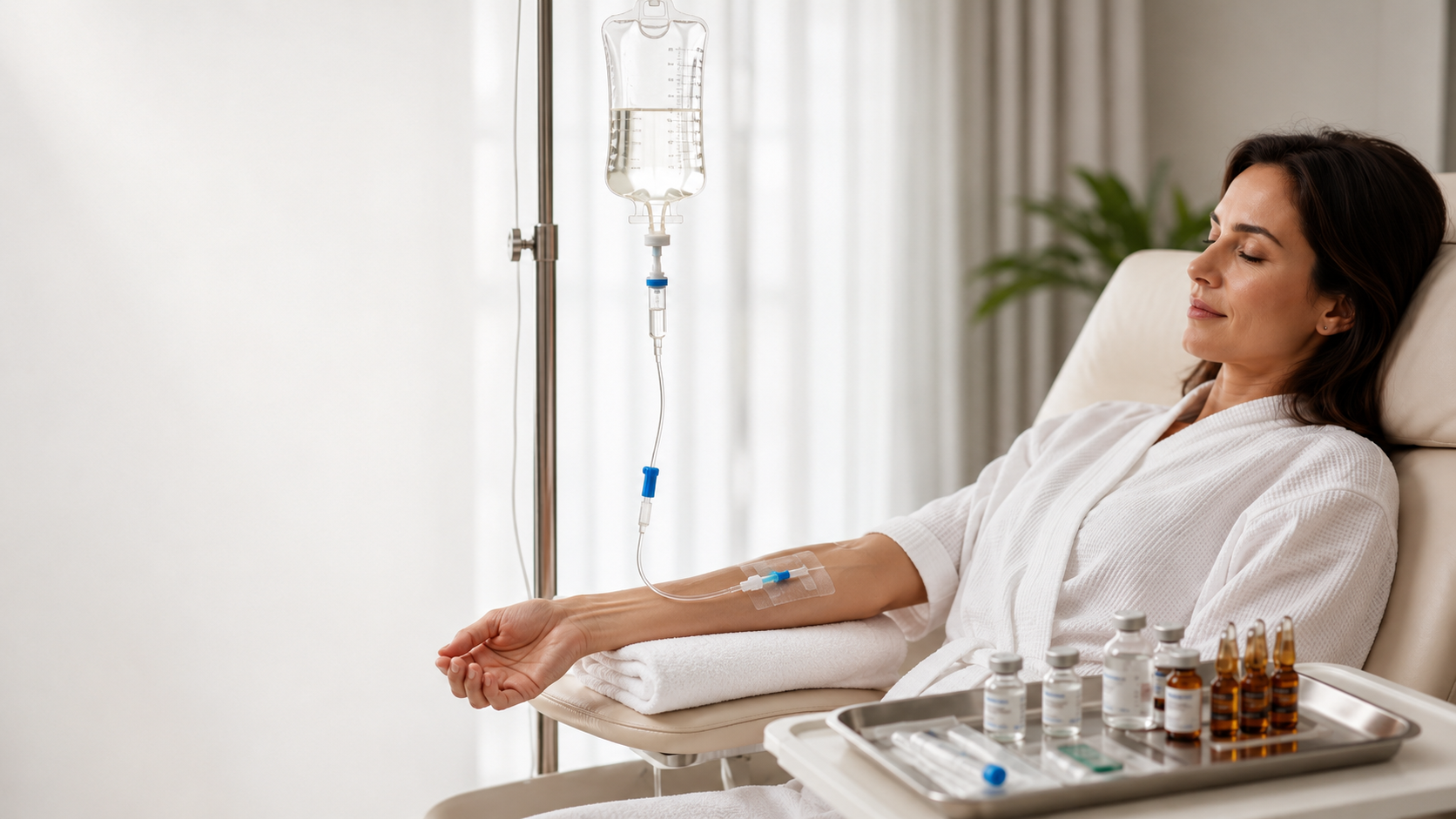
Peek inside and it's less mysterious than the branding suggests. Most drips start with a saline or lactated rRinger base, then build from there depending on the goal. B vitamins for energy and metabolism. Vitamin C,. Magnesium and. Amino acids to help muscles repair. That combo, fluids plus a tailored mix of vitamins and minerals, is what people mean by nutrient infusion therapy.
The pitch is simple. Send it through a vein, and your body uses more of it, instead of losing a chunk to digestion the way it does with a pill. The vitamins and fluids themselves are FDA-regulated, so you know what you're getting.
The Benefits That Hold Up
Cut the hype, and a handful of IV therapy benefits genuinely make sense for active people.
Hydration leads. Real dehydration wrecks your output and your recovery, and a liter of fluid with electrolytes fixes it faster than nursing a water bottle ever could. Recovery comes next, which is why recovery treatments for athletes usually fold in amino acids and magnesium to back up muscle repair. And Pplenty of people feel a real lift afterward, part rehydration, part B vitamins.
So the benefits of IV therapy are grounded ones. You rehydrate faster, you get some recovery and nutrient support, and you do it on a schedule that fits a busy life. For a lot of athletes, that's the whole reason they keep coming back.
Now The Reality
Here's what the highlight reels leave out. If you're already healthy and well hydrated, the proof that vitamin drips boost performance beyond what real food and water give you is thin. Hydration holds up in the research. The vitamin and "detox" claims, far less so but still some basis of truth and biology..
A few things worth saying plainly. A drip won't replace training, sleep, or eating well. It won't fix an injury or paper over a real medical problem. The risks are small but real: vein irritation or, rarely, infection, which is exactly why a registered nurse should place every line. Got a health condition? Run it past your own provider first.
Used well, IV therapy is a handy recovery tool that sits on top of the basics you're already doing.
When a Recovery IV Is Actually Worth It
It's not an everyday thing. But it earns its spot in specific moments. A recovery IV tends to pay off when:
You just finished an endurance event, and you're wiped, cramping, or fighting to rehydrate on water alone.
A stomach bug or a nasty flu left you dried out and behind on fluids.
You're midway through a hard training block, back-to-back sessions, almost no recovery time.
Travel, altitude, or a punishing schedule has you dragging and short on sleep.
You overdid it last night and want to feel like yourself again, fast.
A big event's coming, and you want to show up hydrated and topped offup.
At Revive Wellness and Recovery, the IV drip therapy menu maps straight onto this.
Rest and Recover handles post-workout recovery.
Recharge goes after energy and fatigue.
Anything But Basic keeps it to hydration and electrolytes.
If none of those land, water and a decent meal probably have you covered. Save the drip for the days you're genuinely running on empty.
What a Mobile IV Session Looks Like
If you've never done it, the process is simpler than you'd think. You book a time, and a licensed registered nurse comes to you, whether that's home, the office, or the gym. No waiting room. No drive across town.
The nurse checks you over first, asks about your health and what you're after, then places the line using hospital-grade equipment. From there you sit back while the drip runs, usually 30 to 60 minutes. Most people read, scroll, or just relax through it. When it's done, the nurse packs up and you get on with your day.
That's the whole appeal of a mobile service. The recovery comes to you, a medical director oversees the care, and you lose almost no time getting it.
What To Look For Before You Book
Not every IV service operates the same way, so a few checks matter. The big one is who places the line. A licensed registered nurse, working under a medical director, is the standard you want. Skip anyone vague about their medical oversight.
Ask what's in the drip, too. A good provider tells you exactly which vitamins, minerals, and fluids you're getting, how much of it and uses hospital-grade equipment to deliver them. Pricing should be clear up front, with no surprises. And a solid provider screens your health first instead of hooking up anyone who walks in.
Get those basics right, and IV therapy is a safe, easy addition to your routine. Revive covers all of them across Ada County and Canyon County, and is worth knowing before you pick where to go.
Final Thoughts
IV therapy isn't just for pros and celebrities. The same recovery works for a weekend runner, a busy parent, or anyone who trains hard and needs to bounce back.
That's the upside of a mobile service. You don't have to find a clinic or a babysitter. A licensed registered nurse comes to your home, office, or gym, uses hospital-grade equipment, and works under a medical director.
Revive Wellness and Recovery brings the whole setup to you across Ada County and Canyon County.
Ready when you are.
FAQs
What nutrients are commonly included in IV therapy for athletes?
Most athlete drips start with fluids and electrolytes, then layer in the rest. You'll usually see a B vitamin complex for energy metabolism, vitamin C, magnesium, and an amino acid blend to support muscle repair. Some add glutathione as an antioxidant. The exact mix in IV therapy for athletes depends on the goal, whether that's rehydration, recovery, or a pre-event top-up.
What are the benefits of IV therapy for celebrities?
Same as for everyone else, honestly. Performers deal with heavy travel, late nights, and back-to-back commitments, so they use IV therapy for fast rehydration and quicker recovery between gigs. Hydration also helps you look and feel less wiped out, which matters when cameras are around. There's nothing exclusive about it, though. The same benefits are open to anyone with a packed schedule.
What is nutrient infusion therapy?
It's a drip that delivers fluids plus a mix of vitamins, minerals, and other nutrients straight into your bloodstream. Because it skips digestion, your body can use those nutrients right away. People use nutrient infusion therapy for hydration, recovery, and a general energy boost, usually in a quick session that fits into a normal day.
Why has celebrity IV therapy become a wellness trend?
A few things lined up. Athletes and performers started sharing it, social media ran with it, and mobile services made it easy to book without setting foot in a clinic. Add the wider focus on recovery and wellness, and it caught on fast. Some of the hype is earned, since hydration genuinely helps, and some is just marketing. Either way, what was once a backstage thing is now a normal part of a lot of people's routines.
Can IV therapy improve athletic performance?
Mostly in an indirect way. By keeping you hydrated and helping you recover faster, IV therapy supports the conditions that let you perform, especially around hard training or events. A direct performance boost in athletes who are already healthy and hydrated isn't well supported by the research. So the honest framing is recovery support, and that's where the real value sits.